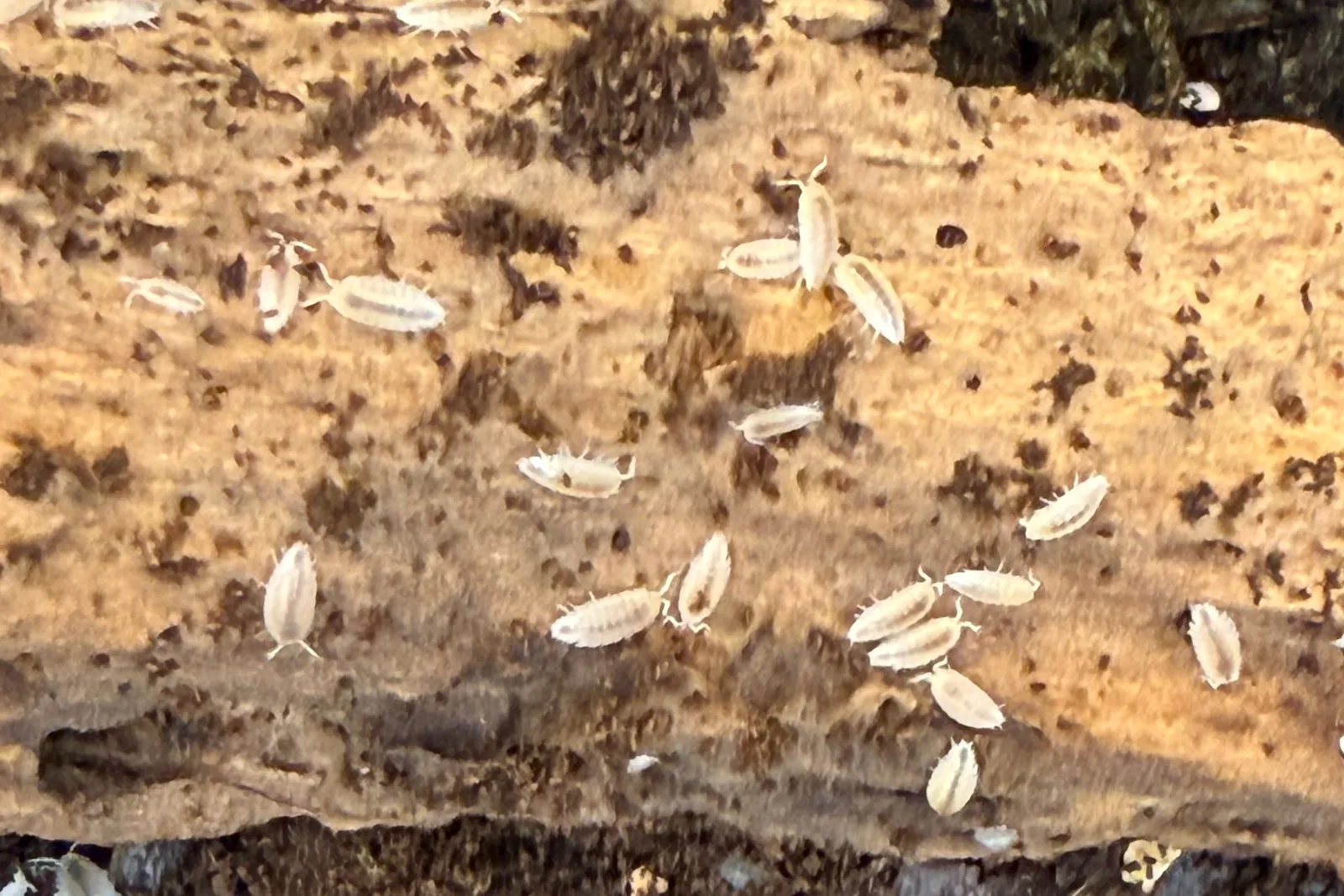
Dwarf White Isopods
Trichorhina tomentosa
Tiny, bright-white and tireless: the go-to cleanup crew for dart frog vivaria and small tropical setups.
$22.00
In stockCulture size
Ships to the contiguous US, Alaska and DC, except Maryland (permit restriction). Not to HI, PR, GU, VI, AS, MP.
Live-Arrival Guarantee
If more than 10% of your culture arrives dead, tell us within 12 hours of delivery (with photos) and we replace or refund every dead animal.
See shipping & guarantee for how claims work.
USDA APHIS permitted shipper
We ship under federal PPQ 526 permits, and only to states they allow for this species.
Our permit numbers: isopodpatch.com/permits
Free 3D figurine with every order
Patch the Isopod, our 3D-printed mascot, ships free in every box, printed the same day as your order.
Difficulty
Beginner
Adult size
2–4 mm
Temperature
70–82 °F
Humidity
60–80%
Breeding
Prolific
Role
Cleanup crew
About
Meet the Dwarf White
Trichorhina tomentosa, the dwarf white isopod, is the classic cleanup crew for tropical vivariums. Adults are only about 2 to 3 mm long, so they live just under the surface, working through waste, mold and leftover food where larger species can't reach.
Only females are known in this species: they reproduce without males, so every adult can start new young and a small culture builds into a dense colony quickly. They like it warm and humid, which makes them a natural match for dart frogs, small geckos and planted tropical terrariums. They're too small to bother healthy plants or animals.
Your culture arrives snug in damp paper towel. Dwarf whites are tiny and like to hide, so look closely. Every order is covered by our live-arrival guarantee and includes Patch the Isopod, our free 3D-printed mascot figurine.
Husbandry
Care snapshot
Substrate
Diet
Native range
Keeper notes
First week
- Tip the whole cup, paper towel and all, into a damp spot and leave it: dwarf whites burrow, and you may not see them for a week or more.
- Never let the substrate dry out: keep it evenly moist, warm and humid.
- Feed sparingly (a light sprinkle of fish flakes) and remove leftovers before they mold: a new colony eats very little.
- Use fine mesh on vents: they're small enough to slip through ordinary gaps.
In your box
What you'll receive
25 healthy, captive-bred animals of mixed sizes (25-count culture)
A snug, escape-proof cup with pin-sized air holes and damp, plant-free packing for the journey
Triple-packed in a styrofoam-insulated box, with a heat or cold pack when the weather calls for one
Our permit number, the APHIS Environmental Awareness Letter and a handling & disposal card
Live-Arrival Guarantee on every order
Patch the Isopod, a free 3D-printed figurine
Dwarf White Isopods: common questions
Do dwarf white isopods need males?
No. Only females are known in this species: they reproduce without males, so every adult can start new young and a small culture builds into a dense colony quickly.
How small are dwarf white isopods?
Adults are only about 2 to 3 mm long, so they live just under the surface, working through waste, mold and leftover food where larger species cannot reach.
Why can't I see my dwarf whites?
They burrow and hide, and play dead when exposed. After you add them you may not see them for a week or more.
Are dwarf whites good for dart frogs?
Yes. They like it warm and humid, which makes them a natural match for dart frogs, small geckos and planted tropical terrariums, and they're too small to bother healthy plants or animals.
Can dwarf white isopods dry out?
Never let the substrate dry out: keep it evenly moist, warm and humid (60–80% humidity, 70–82°F), with a damp hide.
Can you ship Dwarf White isopods to Maryland?
No. Maryland refuses this species on every isopod permit application, to protect Maryland's native animals from non-native species. We ship Dwarf White everywhere else our permits cover. Check your state.
Keep browsing