From The Leaf Litter

Care guides

Care basics for every species we breed: how big they get, the temperature and humidity they like, what to set them up on, what to feed them, and what to expect in the first week. In-depth guides are on the way.

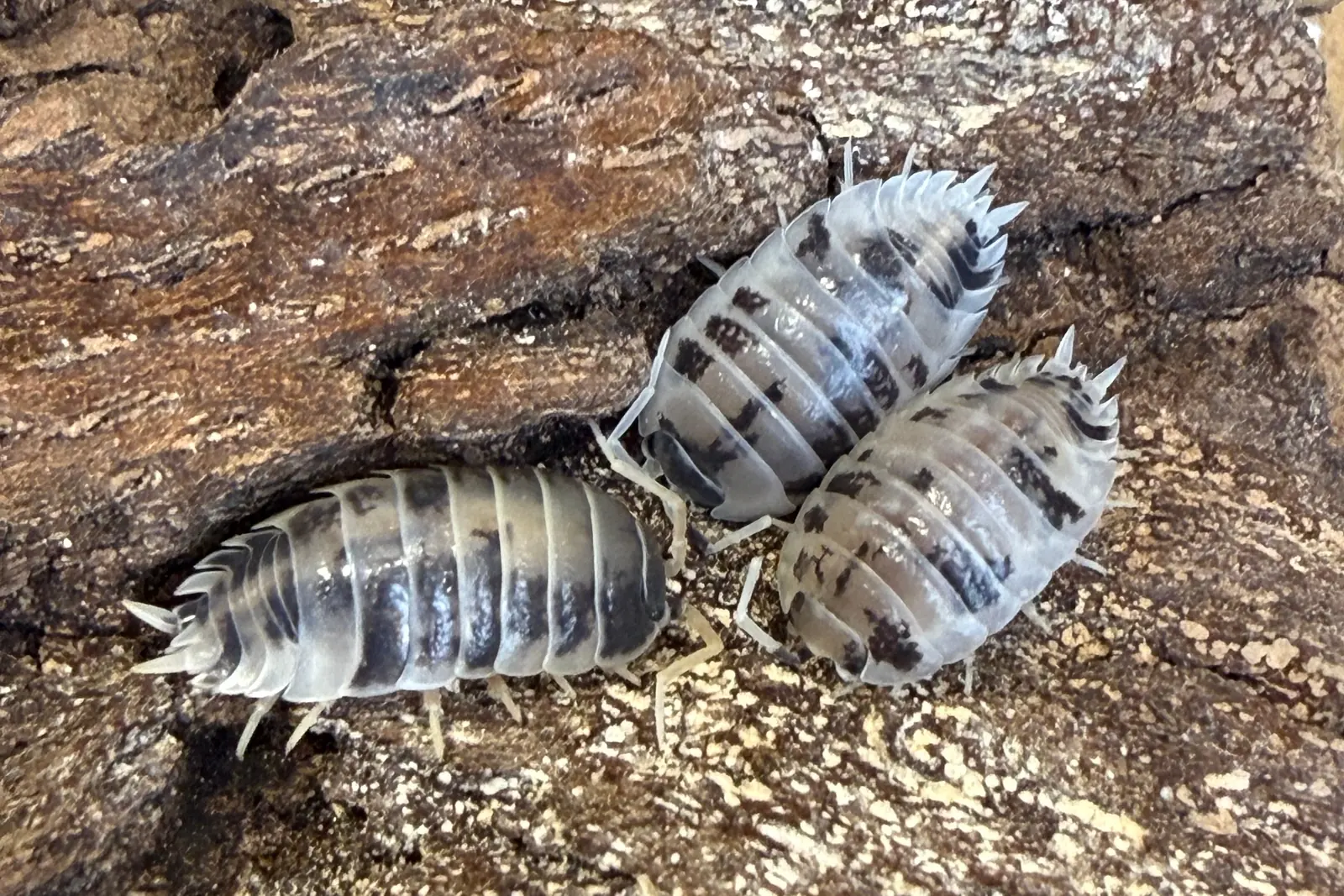
Three Porcellio laevis Dairy Cow isopods with glossy white shells and bold black piebald spots on dark bark

Dairy Cow

Porcellio laevis "Dairy Cow"

Shop Dairy Cow →

Difficulty

Beginner

Adult size

15–20 mm

Temperature

68–80 °F

Humidity

50–70%

Breeding

Prolific

Role

Display + cleanup

Substrate

2–3 inches of moist coco fiber and organic soil topped with leaf litter, white rot wood and bark; keep about half moist (moss helps) and the rest drier.

Diet

Leaf litter and white rot wood as the staple; protein at least twice a week (freeze-dried shrimp or minnows, fish flakes); vegetables; calcium always available (cuttlebone, eggshell).

Native range

Originally Mediterranean / North Africa; now found almost worldwide. "Dairy Cow" is a captive-bred color morph.

Keeper notes

High protein needs: underfed colonies may nibble molting tankmates or small animals, so keep protein in the rotation. Can't roll into a ball. Bold and active in the open.

First week

  • Offer protein from day two (fish flakes or freeze-dried shrimp): Dairy Cows are big eaters, and a well-fed colony leaves molting tankmates alone.
  • Keep about half the substrate moist and half drier, with good airflow.
  • They're fast and can't roll into a ball to hide, so check the lid and vents for gaps before you add them.
  • Expect to see them out exploring within a day or two: they're bold and active in the open.
Porcellionides pruinosus Powder Blue isopods with frosty slate-blue shells on dark, rough bark

Powder Blue

Porcellionides pruinosus "Powder Blue"

Shop Powder Blue →

Difficulty

Beginner

Adult size

8–12 mm

Temperature

70–82 °F

Humidity

50–75%

Breeding

Prolific

Role

Cleanup crew

Substrate

About 2 inches of moisture-holding coco fiber and organic soil with leaf litter and bark. Keep about a quarter of it moist (a damp corner with moss) and the rest dry: they do better on the drier side than kept too wet.

Diet

Leaf litter and white rot wood as the staple; a pinch of protein every 4–7 days (fish flakes, freeze-dried shrimp); vegetables; calcium (cuttlebone, eggshell).

Native range

Mediterranean in origin; now found almost worldwide, often around compost and farms.

Keeper notes

Fast and skittish: they sprint for cover when disturbed. Big appetite for protein. The powdery coating looks brightest right after a molt.

First week

  • Expect a disappearing act: powders sprint for cover and stay hidden for the first few days.
  • Keep about a quarter of the enclosure moist (damp moss or a damp spot under bark) and the rest dry. They need that damp corner, but do worse when everything is wet.
  • Add a pinch of protein after a few days; well-fed powders settle in and start breeding quickly.
  • Cover vents with fine mesh: the babies are tiny and quick.
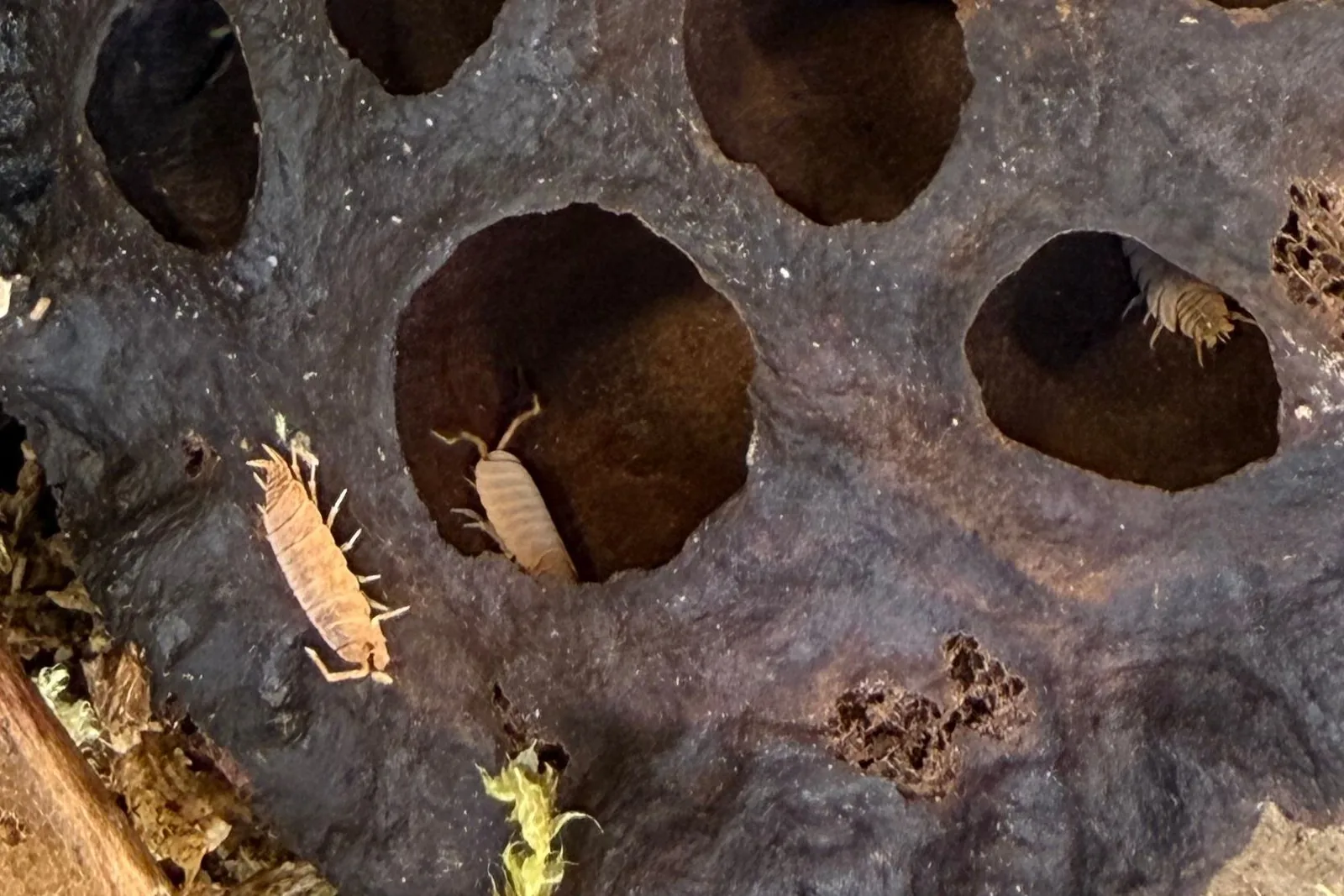
Porcellionides pruinosus Powder Orange isopods, tangerine with a frosted finish, exploring a dried lotus pod

Powder Orange

Porcellionides pruinosus "Powder Orange"

Shop Powder Orange →

Difficulty

Beginner

Adult size

8–12 mm

Temperature

70–82 °F

Humidity

50–75%

Breeding

Prolific

Role

Cleanup crew

Substrate

About 2 inches of moisture-holding coco fiber and organic soil with leaf litter and bark. Keep about a quarter of it moist (a damp corner with moss) and the rest dry: they do better on the drier side than kept too wet.

Diet

Leaf litter and white rot wood as the staple; a pinch of protein every 4–7 days (fish flakes, freeze-dried shrimp); vegetables; calcium (cuttlebone, eggshell).

Native range

Captive-bred color morph of P. pruinosus, a Mediterranean species now found almost worldwide.

Keeper notes

Same care and temperament as Powder Blue: fast, skittish, protein-hungry. Can't roll into a ball.

First week

  • Expect a disappearing act: powders sprint for cover and stay hidden for the first few days.
  • Keep about a quarter of the enclosure moist (damp moss or a damp spot under bark) and the rest dry. They need that damp corner, but do worse when everything is wet.
  • Add a pinch of protein after a few days; well-fed powders settle in and start breeding quickly.
  • Cover vents with fine mesh: the babies are tiny and quick.
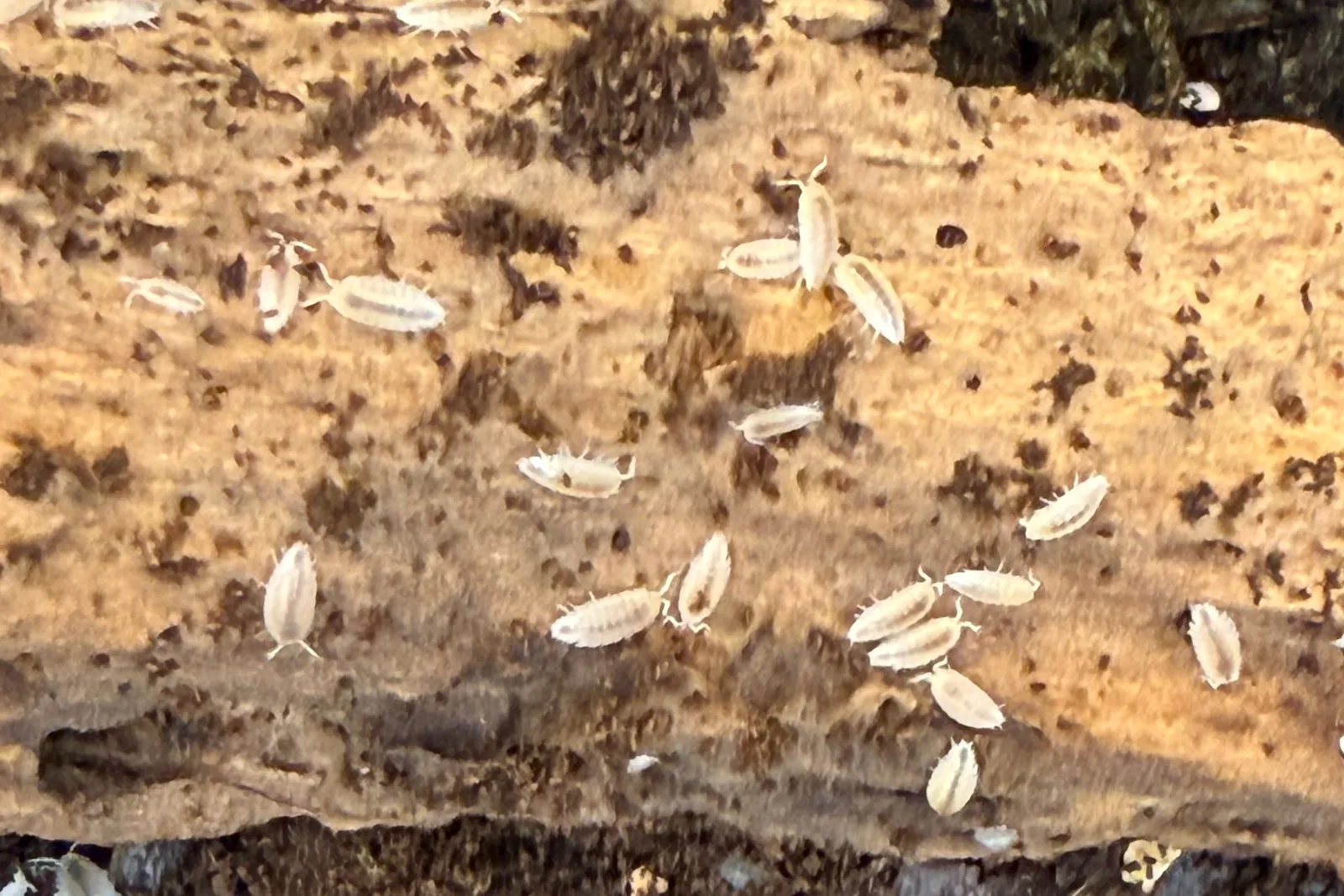
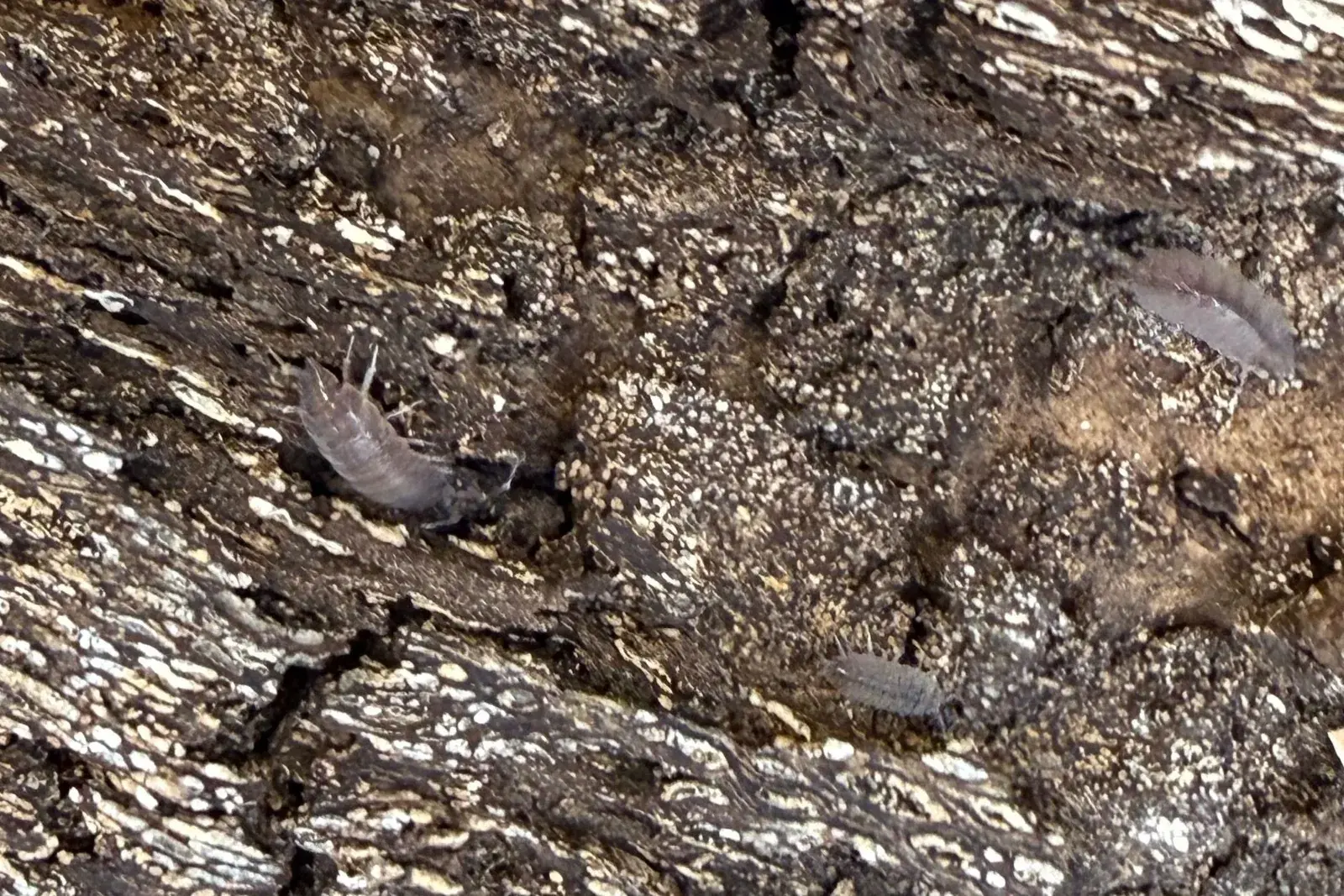
A group of Trichorhina tomentosa dwarf white isopods, tiny and bright white, on cork bark

Dwarf White

Trichorhina tomentosa

Shop Dwarf White →

Difficulty

Beginner

Adult size

2–4 mm

Temperature

70–82 °F

Humidity

60–80%

Breeding

Prolific

Role

Cleanup crew

Substrate

At least 2 inches of consistently moist, organic substrate (coco fiber, soil, a little sphagnum) with leaf litter; a damp hide helps. Never let it dry out.

Diet

Decaying leaves and white rot wood; a light sprinkle of fish flakes or other protein and the occasional vegetable. Remove uneaten food before it molds.

Native range

A tropical species, now widespread in greenhouses and vivariums around the world.

Keeper notes

All-female (parthenogenetic), so one adult can start a colony. Shy burrowers that play dead when exposed. Use fine ventilation: they can slip through small gaps.

First week

  • Tip the whole cup, paper towel and all, into a damp spot and leave it: dwarf whites burrow, and you may not see them for a week or more.
  • Never let the substrate dry out: keep it evenly moist, warm and humid.
  • Feed sparingly (a light sprinkle of fish flakes) and remove leftovers before they mold: a new colony eats very little.
  • Use fine mesh on vents: they're small enough to slip through ordinary gaps.
Two Armadillidium vulgare Magic Potion pill bugs on bark, white shells flecked with yellow and small dark spots, one rolled into a ball

Magic Potion

Armadillidium vulgare "Magic Potion"

Shop Magic Potion →

Difficulty

Beginner

Adult size

12–18 mm

Temperature

65–80 °F

Humidity

45–65%

Breeding

Moderate

Role

Display

Substrate

2–3 inches of coco fiber and organic soil with leaf litter and bark; keep about a third moist and the rest drier, with good ventilation (stagnant air invites mold).

Diet

Decaying hardwood leaves and white rot wood as the staple; vegetables; occasional protein; calcium available at all times (cuttlebone, eggshell, limestone).

Native range

Europe and the Mediterranean (the common pill bug); now found almost worldwide. "Magic Potion" is a captive-bred dalmatian color line.

Keeper notes

Rolls into a ball (conglobates). Drought tolerant; constant wetness causes problems. Lives about 2–3 years. Like all isopods, highly sensitive to pesticides.

First week

  • Keep about a third of the enclosure moist and let the rest dry between mistings: pill bugs don't like constant wetness.
  • Put out a calcium source (cuttlebone or limestone) on day one: their thick shells depend on it.
  • Rolling into a ball is how they react to being handled: leave them be for the first week and they'll settle faster.
  • Keep the air moving: good ventilation keeps mold away.
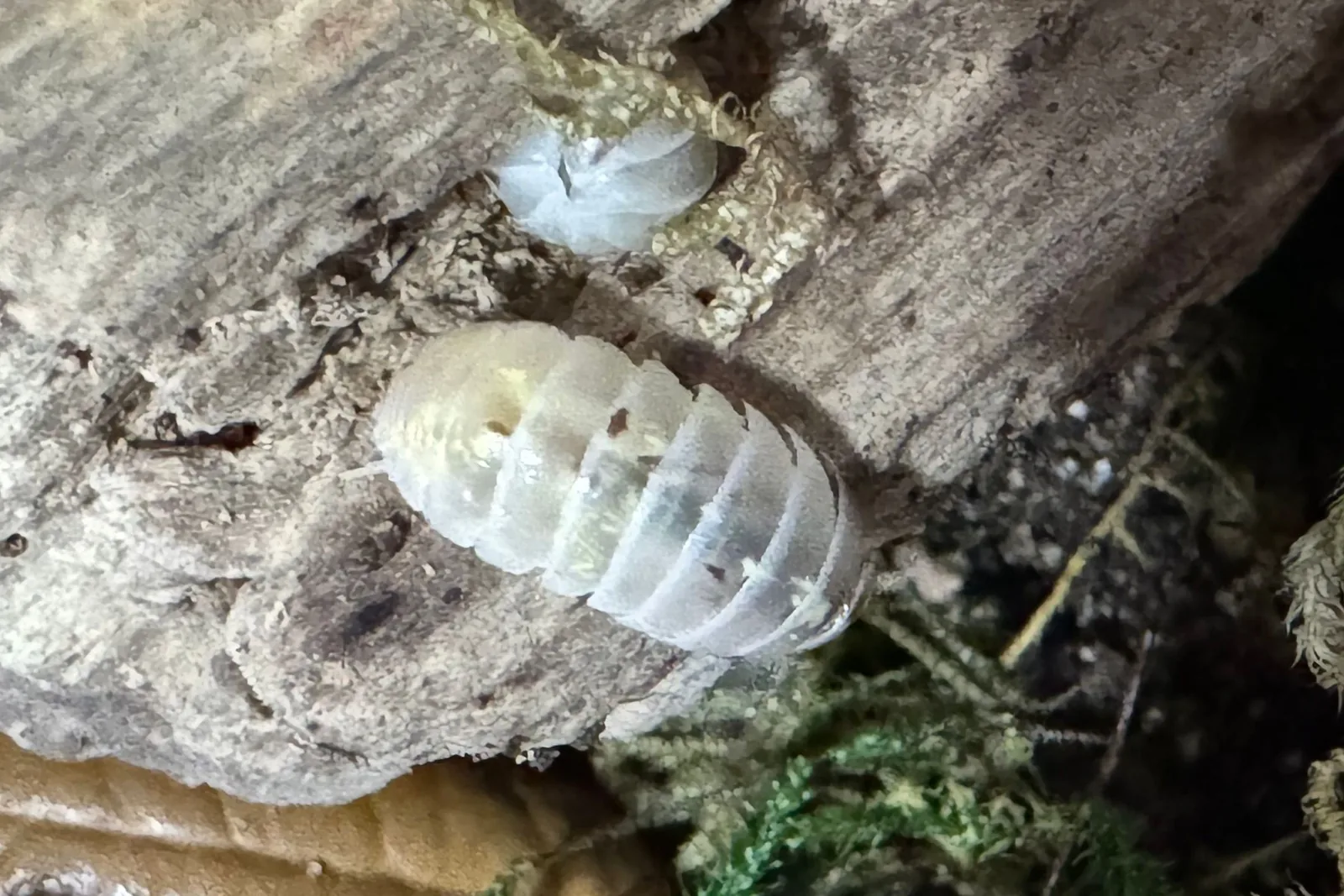
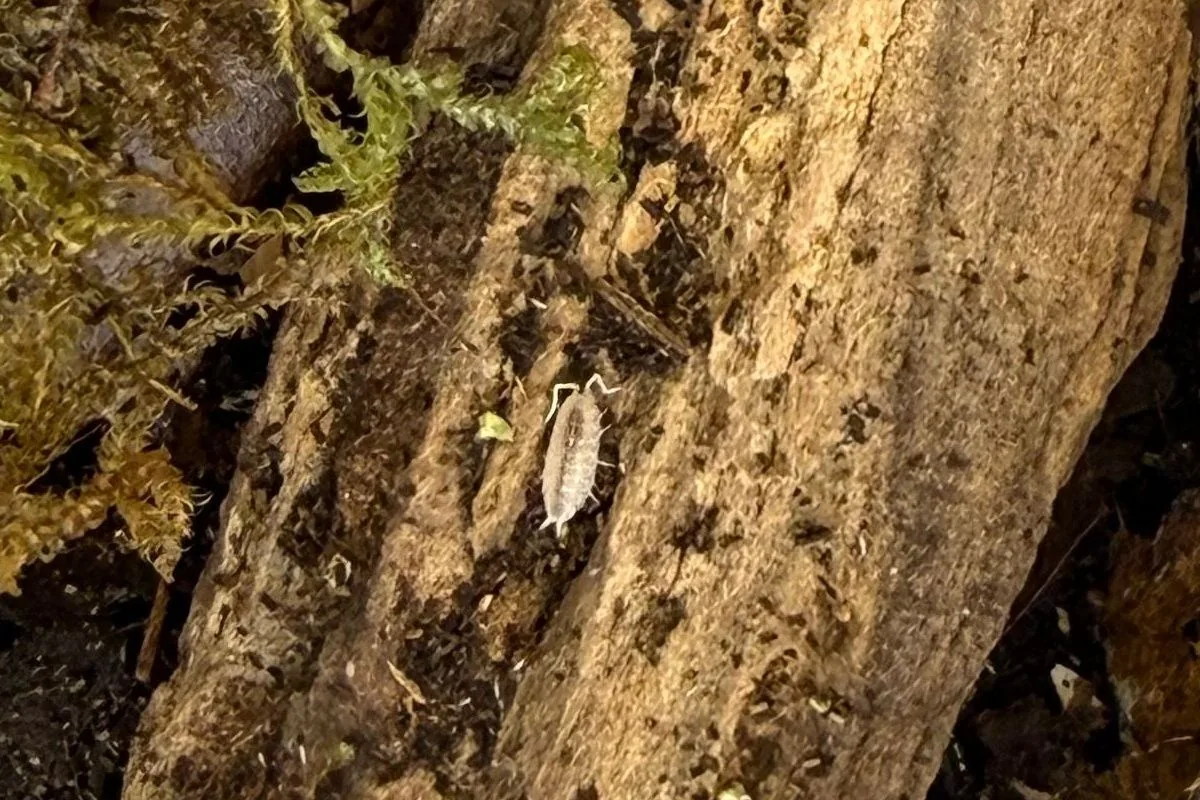
Porcellionides pruinosus White Out isopod, a translucent white powder morph, on weathered bark beside moss

White Out

Porcellionides pruinosus "White Out"

Shop White Out →

Difficulty

Beginner

Adult size

8–12 mm

Temperature

70–82 °F

Humidity

50–75%

Breeding

Prolific

Role

Cleanup crew

Substrate

About 2 inches of moisture-holding coco fiber and organic soil with leaf litter and bark. Keep about a quarter of it moist (a damp corner with moss) and the rest dry: they do better on the drier side than kept too wet.

Diet

Leaf litter and white rot wood as the staple; a pinch of protein every 4–7 days (fish flakes, freeze-dried shrimp); vegetables; calcium (cuttlebone, eggshell).

Native range

A pigment-free color morph of P. pruinosus, a Mediterranean species now found almost worldwide.

Keeper notes

Same care and temperament as Powder Blue and Powder Orange.

First week

  • Expect a disappearing act: powders sprint for cover and stay hidden for the first few days.
  • Keep about a quarter of the enclosure moist (damp moss or a damp spot under bark) and the rest dry. They need that damp corner, but do worse when everything is wet.
  • Add a pinch of protein after a few days; well-fed powders settle in and start breeding quickly.
  • Cover vents with fine mesh: the babies are tiny and quick.
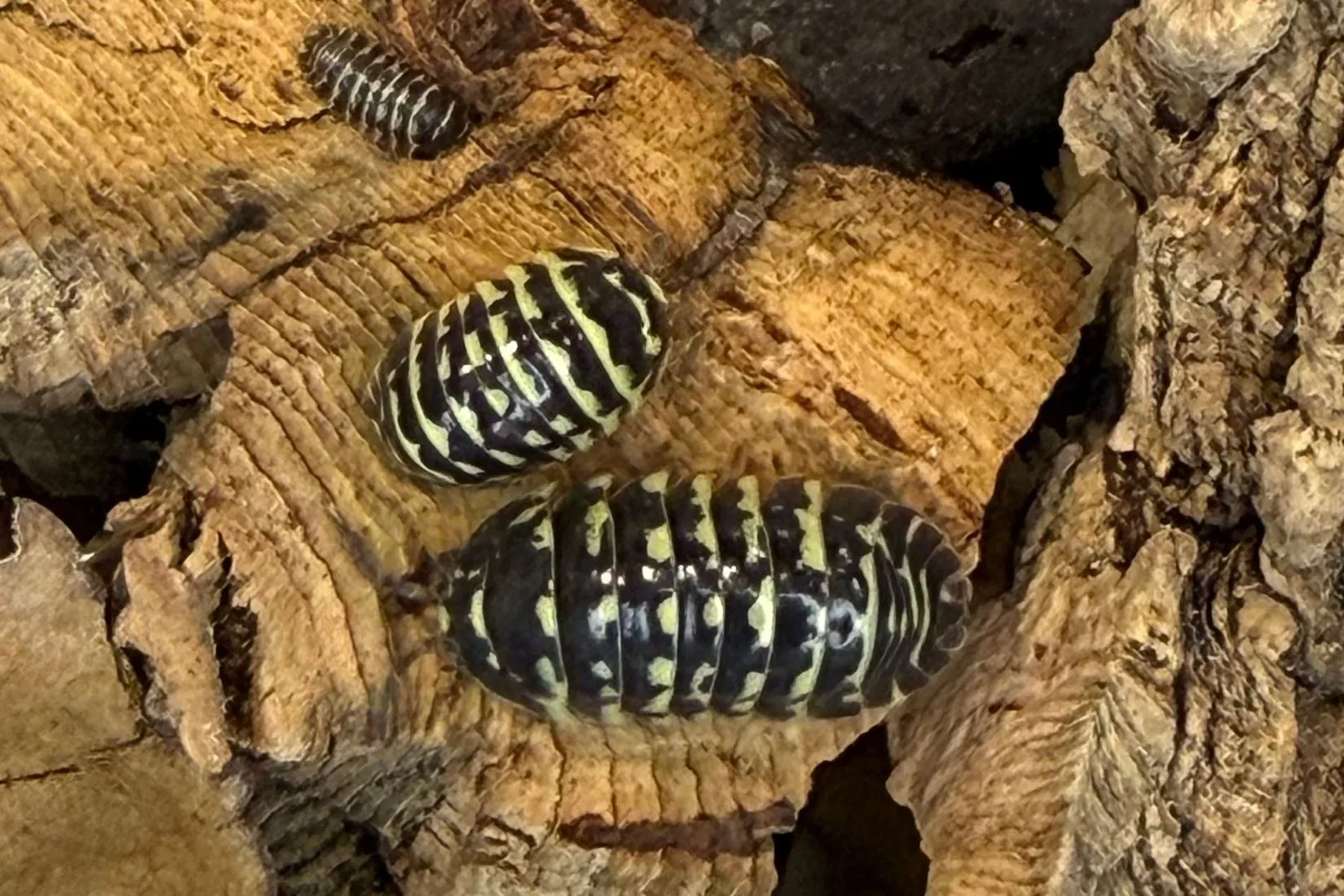
Two Armadillidium maculatum Yellow Zebra pill bugs with yellow and black banded stripes on cork bark

Yellow Zebra

Armadillidium maculatum "Yellow Zebra"

Shop Yellow Zebra →

Difficulty

Beginner

Adult size

12–18 mm

Temperature

65–80 °F

Humidity

45–65%

Breeding

Moderate

Role

Display

Substrate

2–3 inches of coco fiber and organic soil with leaf litter, bark and a calcium source mixed in; about half moist and half dry, with moderate ventilation.

Diet

A steady supply of decaying hardwood leaves, plus white rot wood, vegetables, occasional protein, and calcium (cuttlebone, limestone).

Native range

Southern France and the Mediterranean coast. "Yellow Zebra" is a captive-bred color form.

Keeper notes

Rolls into a ball (conglobates). Prefers a drier surface than the powders: avoid keeping the whole enclosure wet.

First week

  • Keep about half the surface dry and half moist, with moderate ventilation: don't soak the whole enclosure.
  • Mix a calcium source (crushed limestone or cuttlebone) into the substrate from day one.
  • Give them plenty of leaf litter: zebras eat a lot of it.
  • Breeding is moderate, so expect few babies at first: an undisturbed colony builds up over the following months.
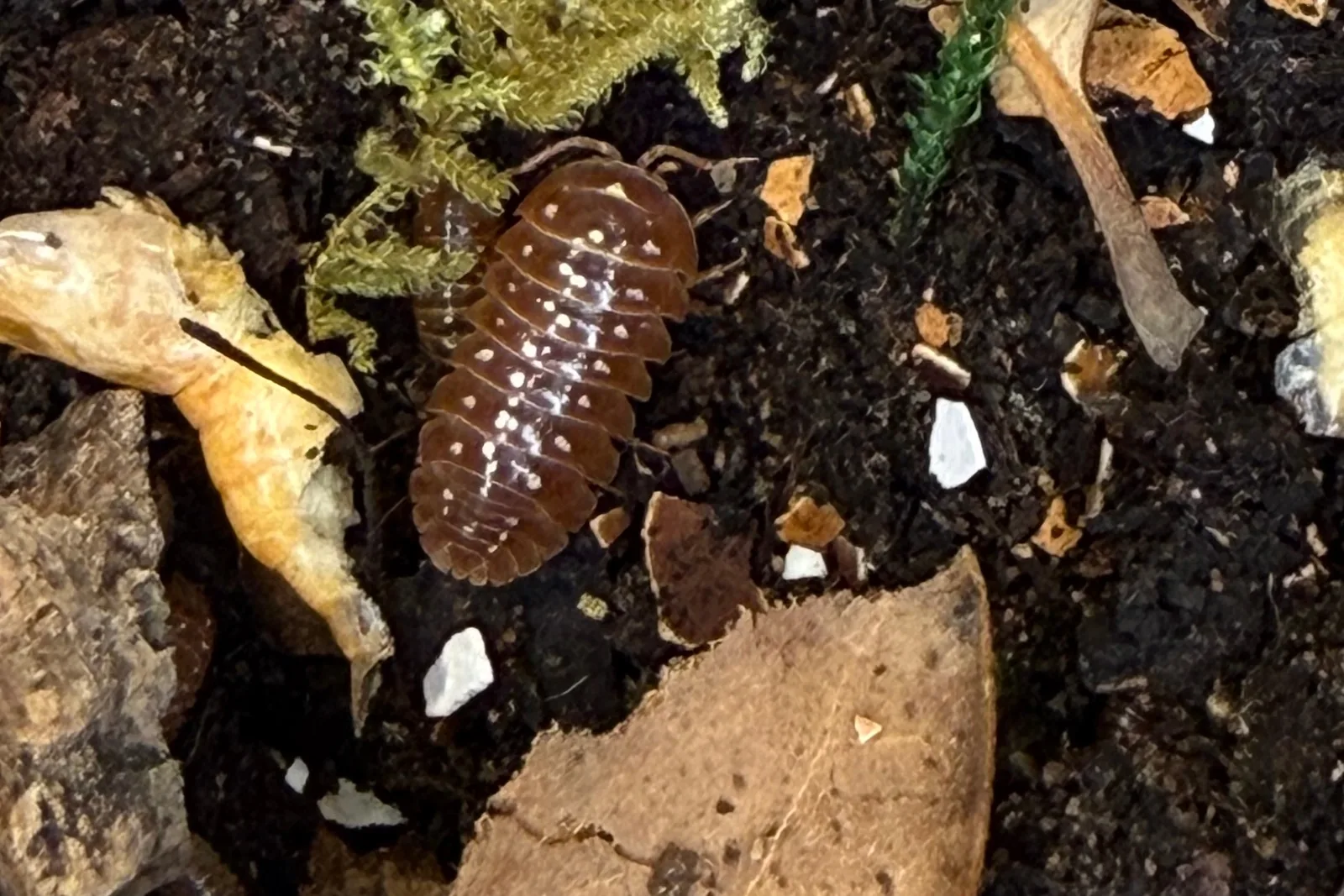
Armadillidium klugii Orange Clown pill bug: an orange shell dotted with rows of white and yellow spots

Orange Clown

Armadillidium klugii "Orange Clown"

Shop Orange Clown →

Difficulty

Intermediate

Adult size

14–20 mm

Temperature

70–78 °F

Humidity

40–60%

Breeding

Moderate

Role

Display

Substrate

2–3 inches of coco fiber and organic soil with crushed limestone, leaf litter, bark and rock; mostly dry with one moist corner, and good ventilation.

Diet

Decaying hardwood leaves and white rot wood as the staple; vegetables; occasional protein; calcium available at all times (cuttlebone, limestone).

Native range

The Adriatic coast of the Balkans (Montenegro, Croatia). "Orange Clown" is a captive-bred color morph; hobby lines are reported to come from Montenegro stock.

Keeper notes

Rolls into a ball (conglobates). Slow to establish, so expect some early losses; steadier once settled. Drier is safer than wetter. Keep it apart from other A. klugii lines: crossing them dilutes the orange.

First week

  • Start them mostly dry with one moist corner and strong ventilation: with clowns, drier is safer than wetter.
  • Keep them steadily warm, toward the top of room temperature, but out of sustained heat above 80°F.
  • Calcium all the time: crushed limestone plus cuttlebone.
  • New colonies start slowly: leave them undisturbed, and don't worry if they hide for the first weeks.