Dairy Cow Isopods
Porcellio laevis "Dairy Cow"
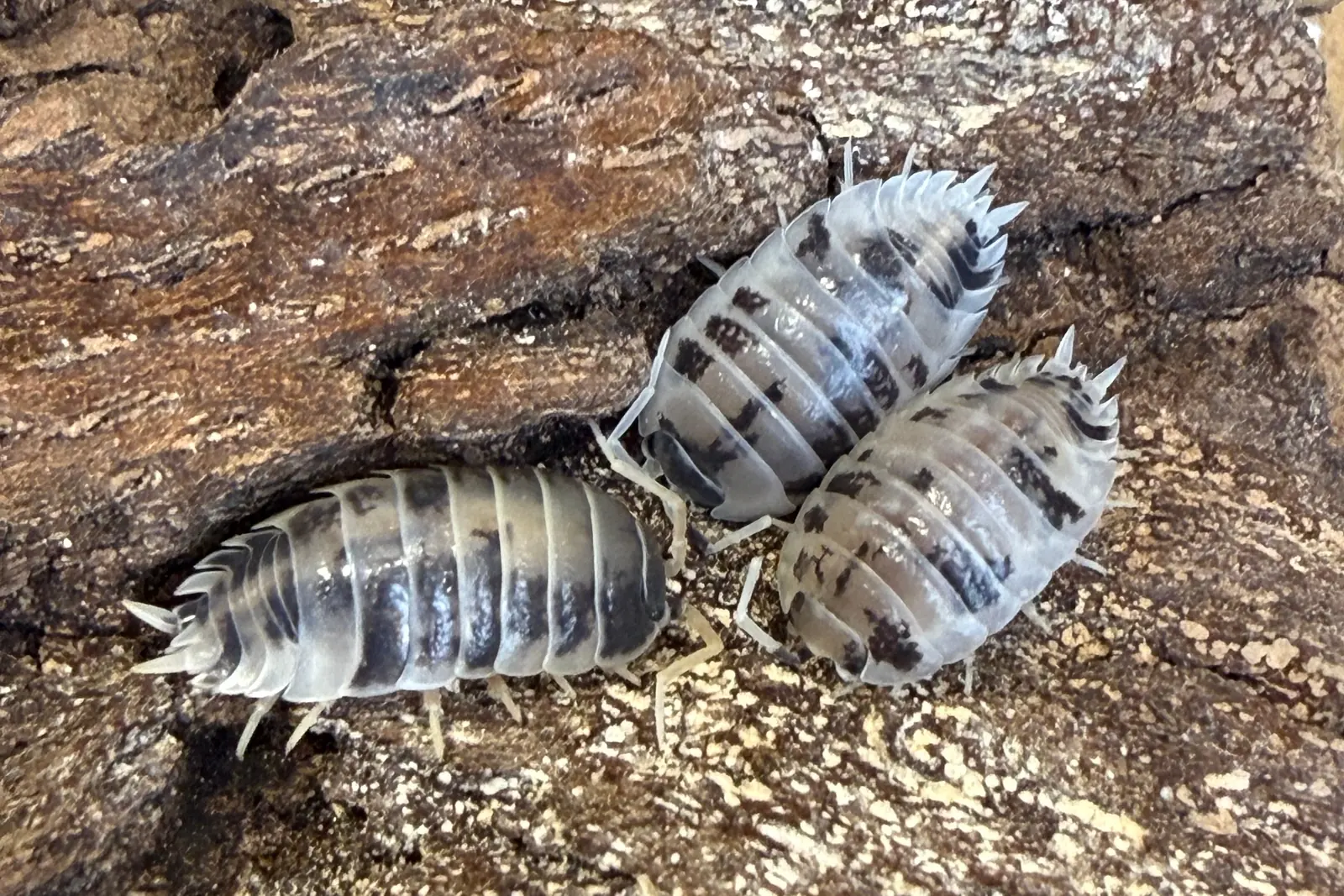
The crowd favorite. Bold black-and-white spotted pattern, fast breeding, and a hardworking bioactive cleanup crew.
$18.00
In stockCulture size
Ships to the contiguous US, Alaska and DC. Not to HI, PR, GU, VI, AS, MP.
Live-Arrival Guarantee
If more than 10% of your culture arrives dead, tell us within 12 hours of delivery (with photos) and we replace or refund every dead animal.
See shipping & guarantee for how claims work.
USDA APHIS permitted shipper
We ship under federal PPQ 526 permits, and only to states they allow for this species.
Our permit numbers: isopodpatch.com/permits
Free 3D figurine with every order
Patch the Isopod, our 3D-printed mascot, ships free in every box, printed the same day as your order.
Difficulty
Beginner
Adult size
15–20 mm
Temperature
68–80 °F
Humidity
50–70%
Breeding
Prolific
Role
Display + cleanup
About
Meet the Dairy Cow
Porcellio laevis "Dairy Cow" is one of the most recognizable isopods in the hobby: a broad, smooth ivory shell splashed with bold black patches, so no two look quite alike. P. laevis is one of the larger cleanup species, with adults commonly reaching around 2 cm.
Dairy Cows are bold, fast-breeding and always hungry, which makes them a favorite for larger bioactive reptile enclosures and for keepers who want a colony they can actually watch. They are fairly drought tolerant for an isopod and adapt to a wide range of setups, as long as they get regular protein.
Your culture arrives snug in damp paper towel with a mix of juveniles and young adults, ready to settle in and breed. Every order is covered by our live-arrival guarantee and includes Patch the Isopod, our free 3D-printed mascot figurine.
Husbandry
Care snapshot
Substrate
Diet
Native range
Keeper notes
First week
- Offer protein from day two (fish flakes or freeze-dried shrimp): Dairy Cows are big eaters, and a well-fed colony leaves molting tankmates alone.
- Keep about half the substrate moist and half drier, with good airflow.
- They're fast and can't roll into a ball to hide, so check the lid and vents for gaps before you add them.
- Expect to see them out exploring within a day or two: they're bold and active in the open.
In your box
What you'll receive
10 healthy, captive-bred animals of mixed sizes (10-count culture)
A snug, escape-proof cup with pin-sized air holes and damp, plant-free packing for the journey
Triple-packed in a styrofoam-insulated box, with a heat or cold pack when the weather calls for one
Our permit number, the APHIS Environmental Awareness Letter and a handling & disposal card
Live-Arrival Guarantee on every order
Patch the Isopod, a free 3D-printed figurine
Dairy Cow Isopods: common questions
How big do Dairy Cow isopods get?
Adults commonly reach around 2 cm (15–20 mm), which makes Porcellio laevis one of the larger cleanup species.
Can Dairy Cow isopods roll into a ball?
No. Porcellio laevis can't roll into a ball to hide. Dairy Cows are fast, so check the lid and vents for gaps before you add them.
How often should I feed Dairy Cows protein?
At least twice a week: freeze-dried shrimp or minnows, or fish flakes. They are big eaters, and a well-fed colony leaves molting tankmates alone; underfed colonies may nibble molting tankmates or small animals.
What humidity do Dairy Cow isopods need?
Around 50–70%, at 68–80°F. Keep about half the substrate moist (moss helps) and the rest drier, with good airflow: they are fairly drought tolerant for an isopod.
Are Dairy Cows a cleanup crew or a display isopod?
Both. They are bold, fast-breeding and always hungry, a favorite for larger bioactive reptile enclosures and for keepers who want a colony they can actually watch.
Keep browsing